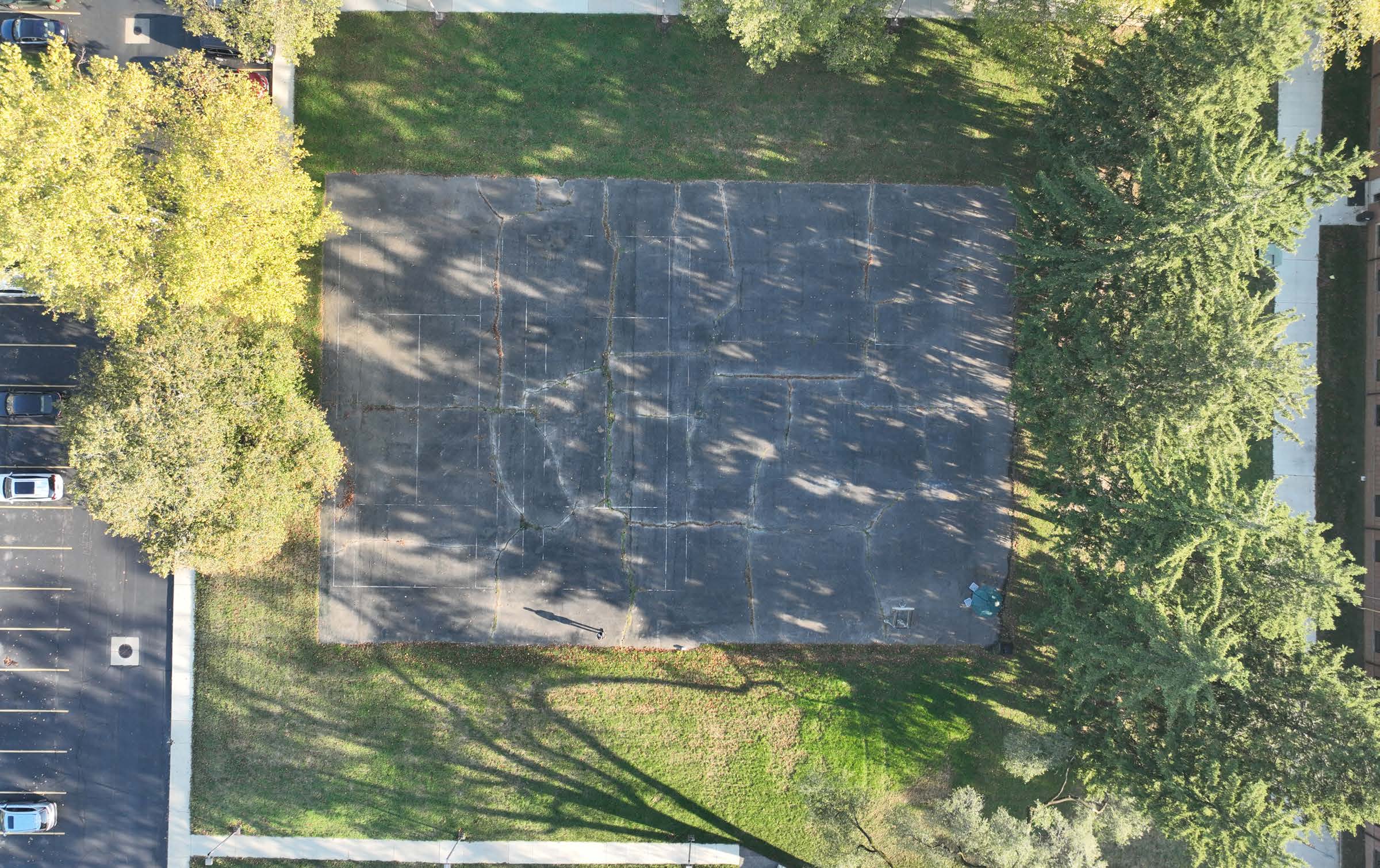
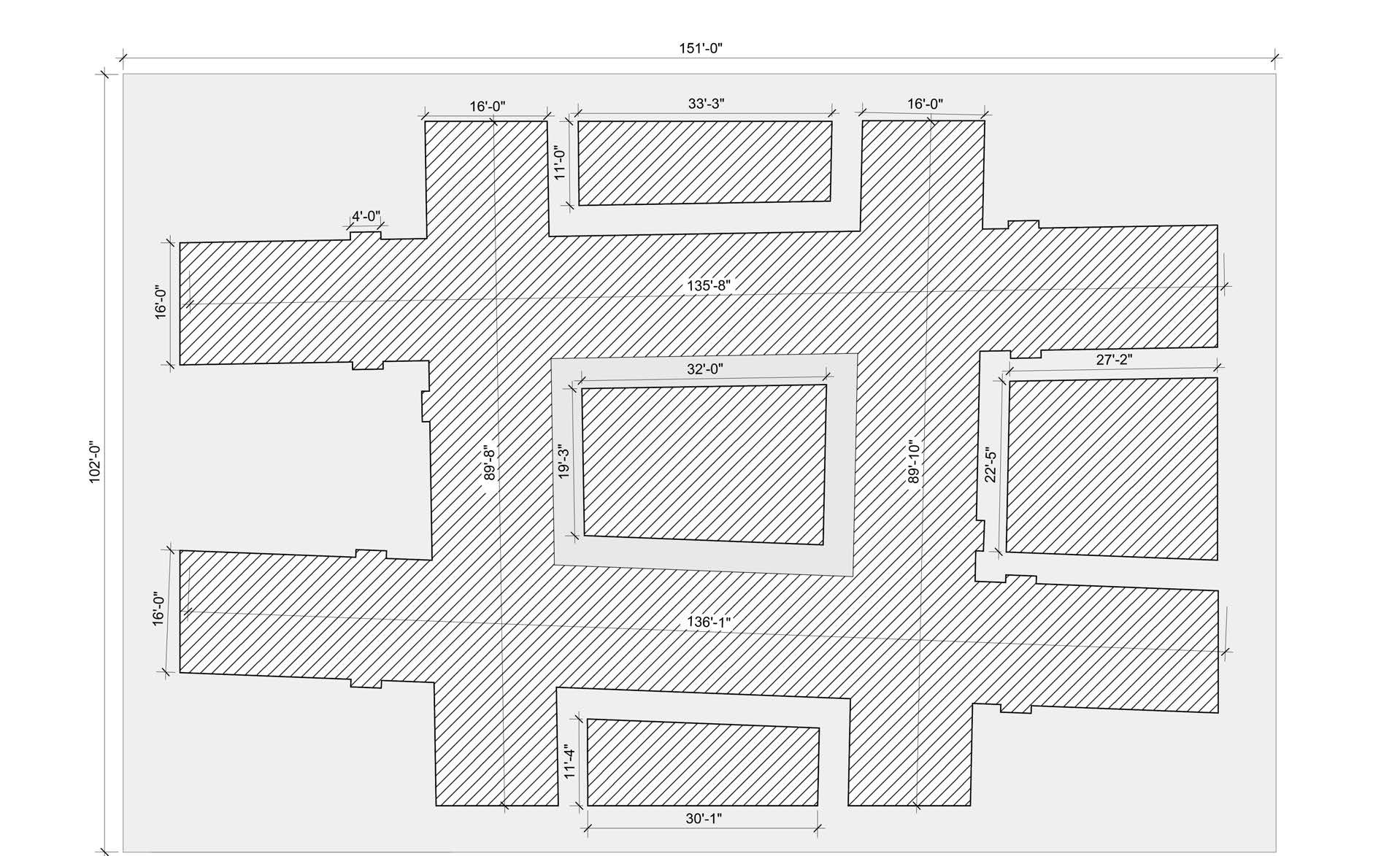
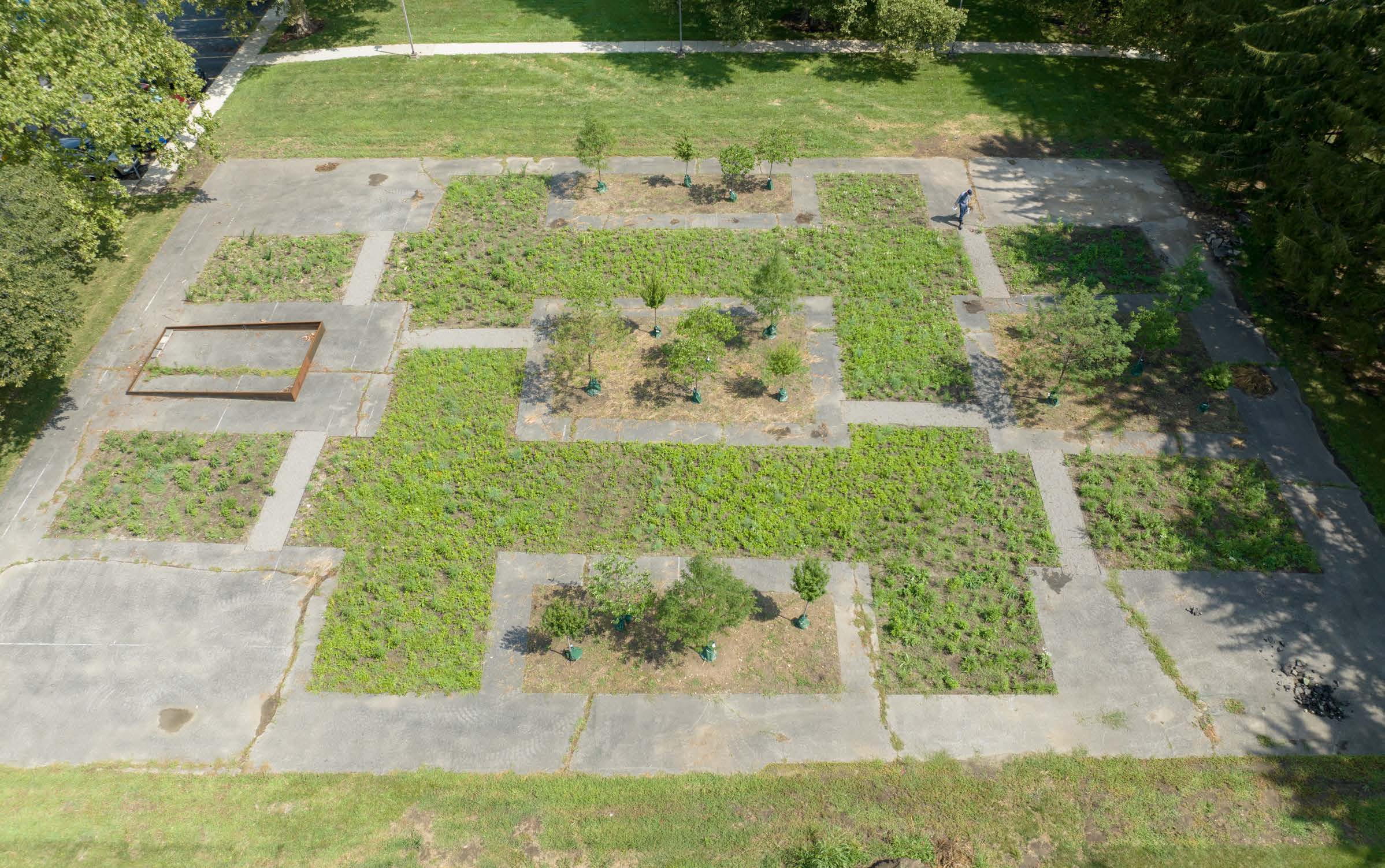
A once underutilized asphalt pad along the edge of campus is being transformed into a vibrant prairie and outdoor learning environment thanks to collaboration across the university and funding from the Integrated Physical Planning Liaison Group (IPPLG) Framework Learning Space Grant and an Ohio State Sustainability grant. Located at 690 Ackerman Road, the site now features native plantings, handcrafted seating and experimental planters designed to create a welcoming space for both people and pollinators.
For project leaders Parker Sutton and Katie Jenkins, professors of landscape architecture in the Knowlton School of Architecture, the idea for the prairie began with a simple discovery. “We stumbled on the location one day in the spring of 2024,” said Jenkins. “It was a large, underutilized space in an area with high foot traffic and little available public space. It also receives quite a bit of daylight. Altogether, this added up to a site with immense potential.”
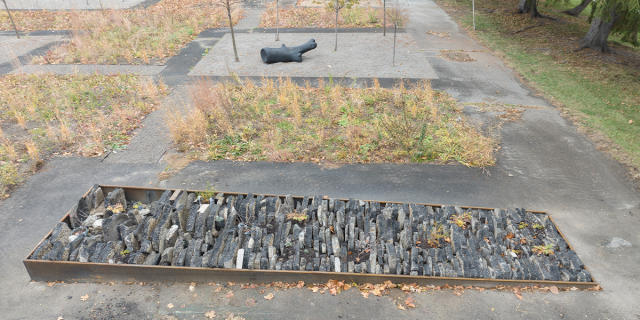
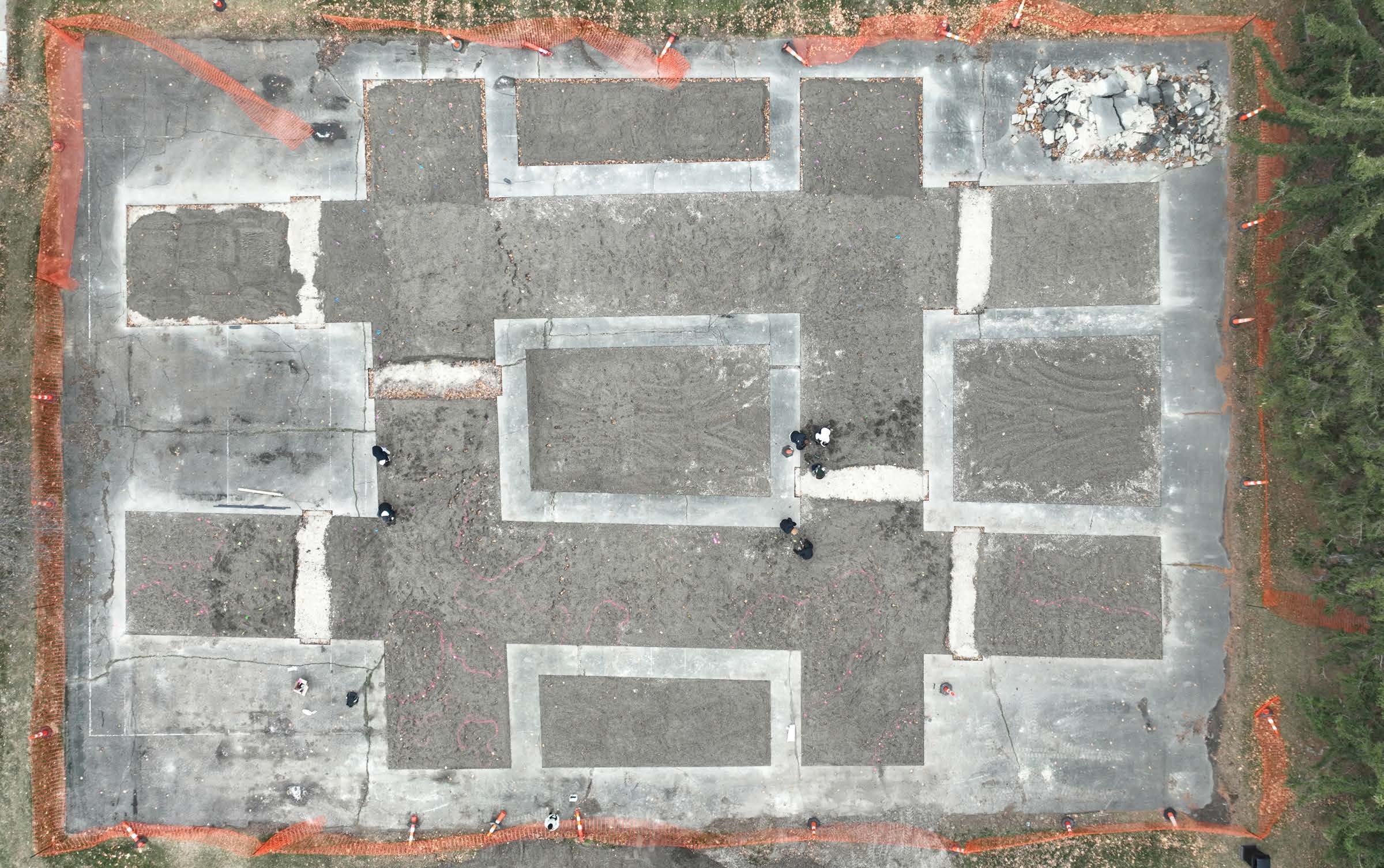
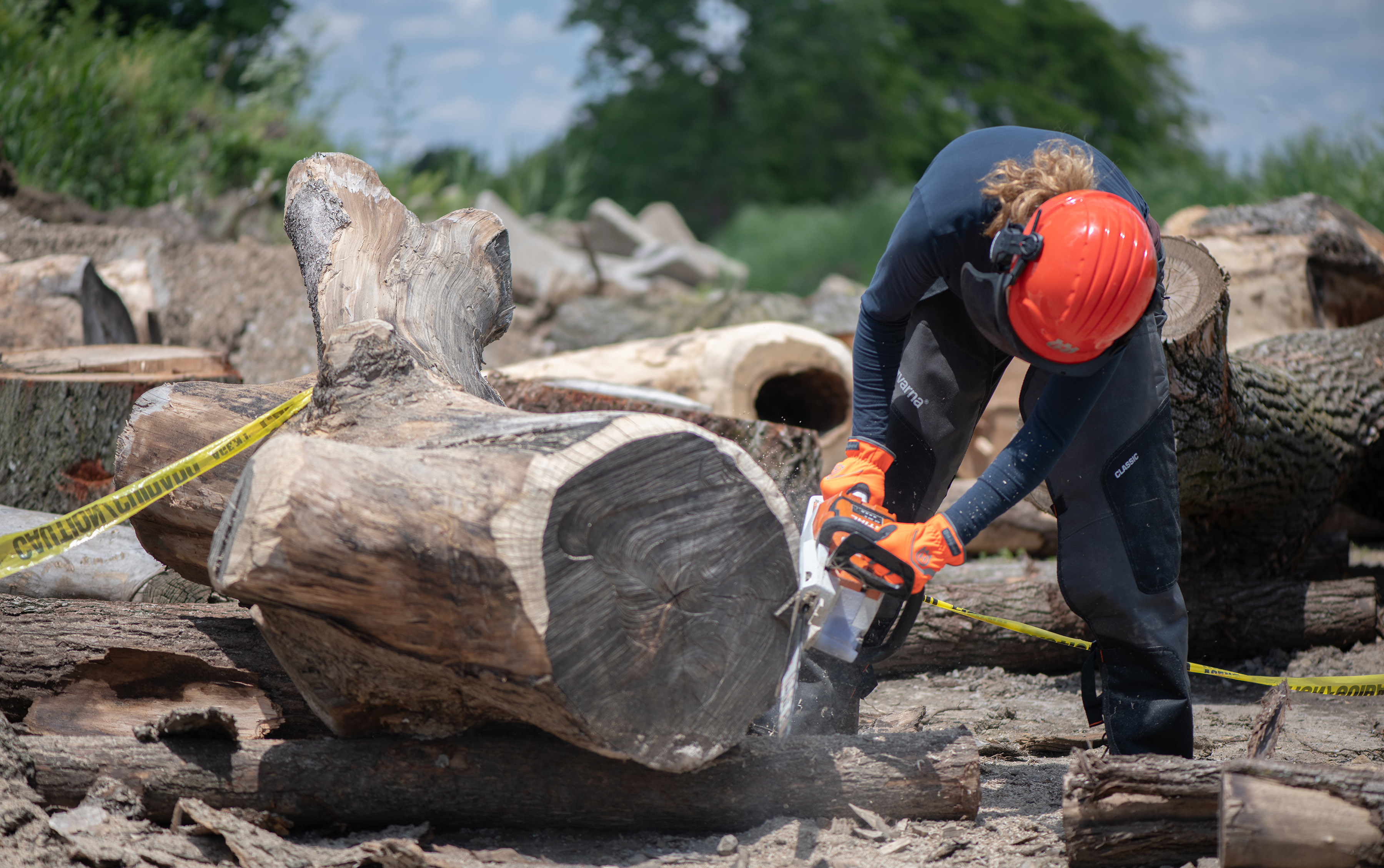
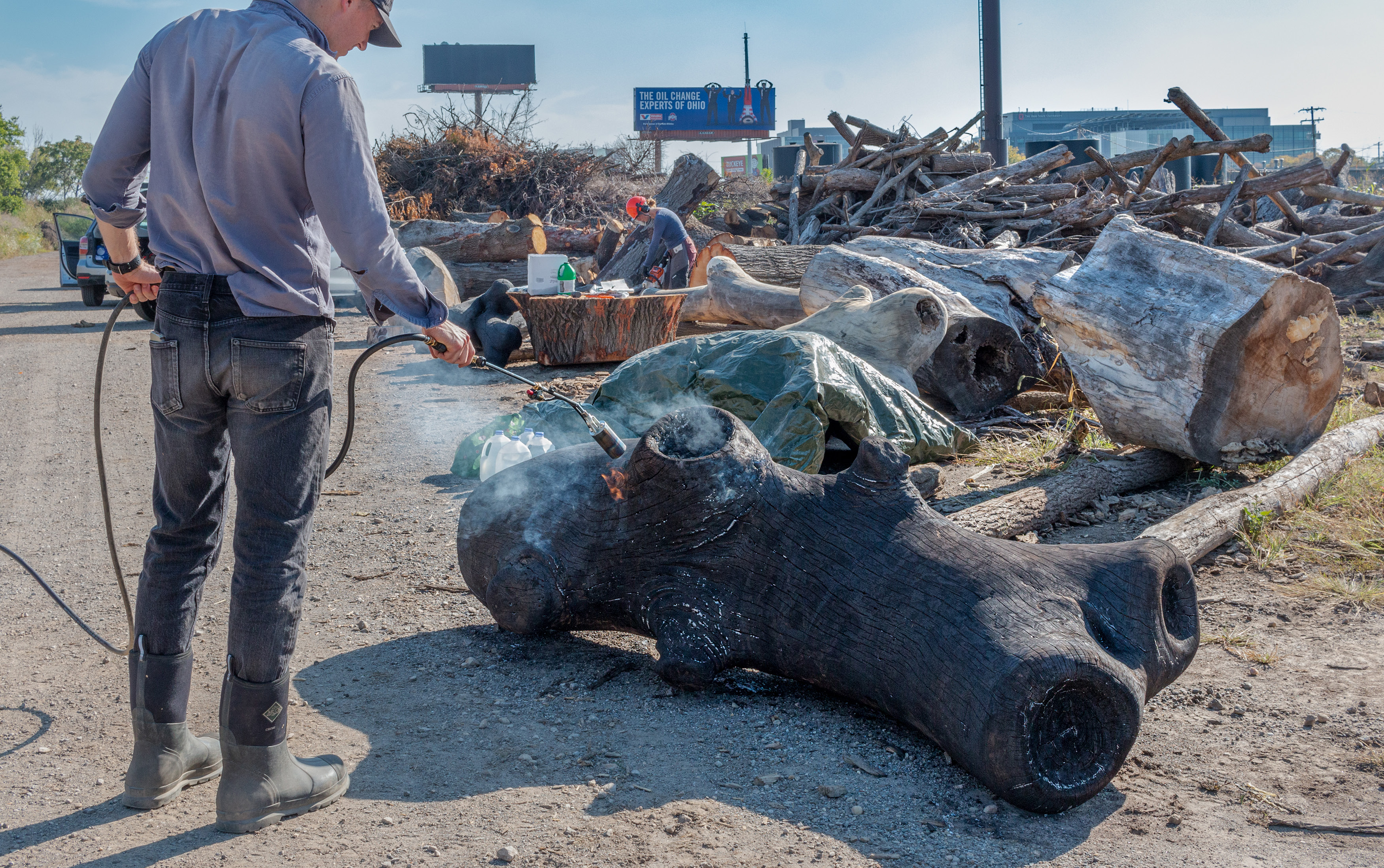
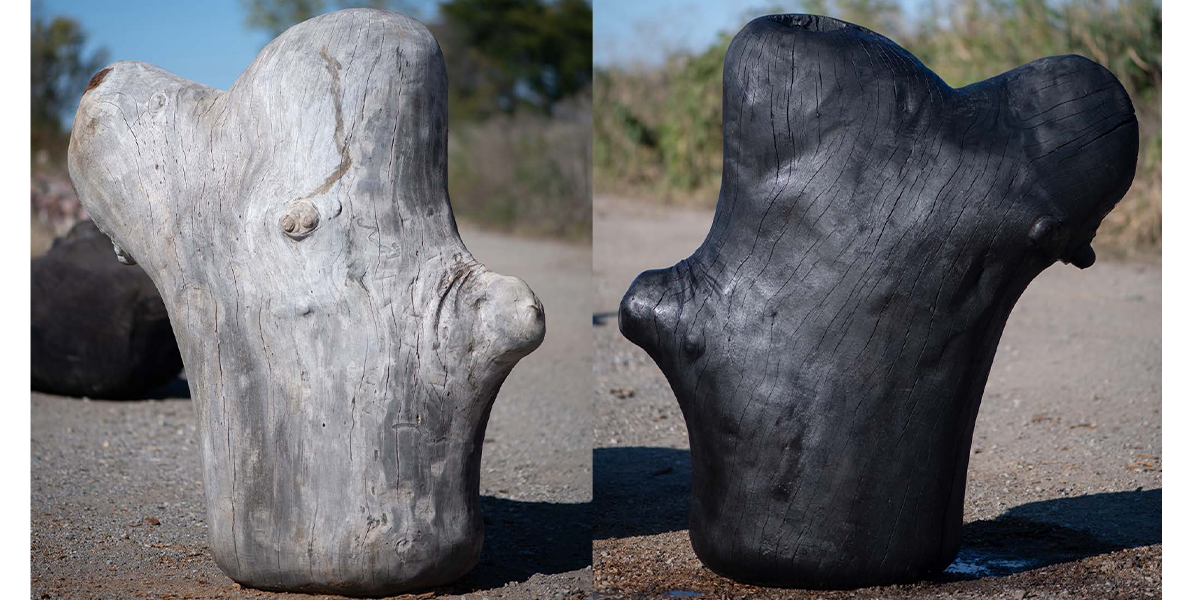
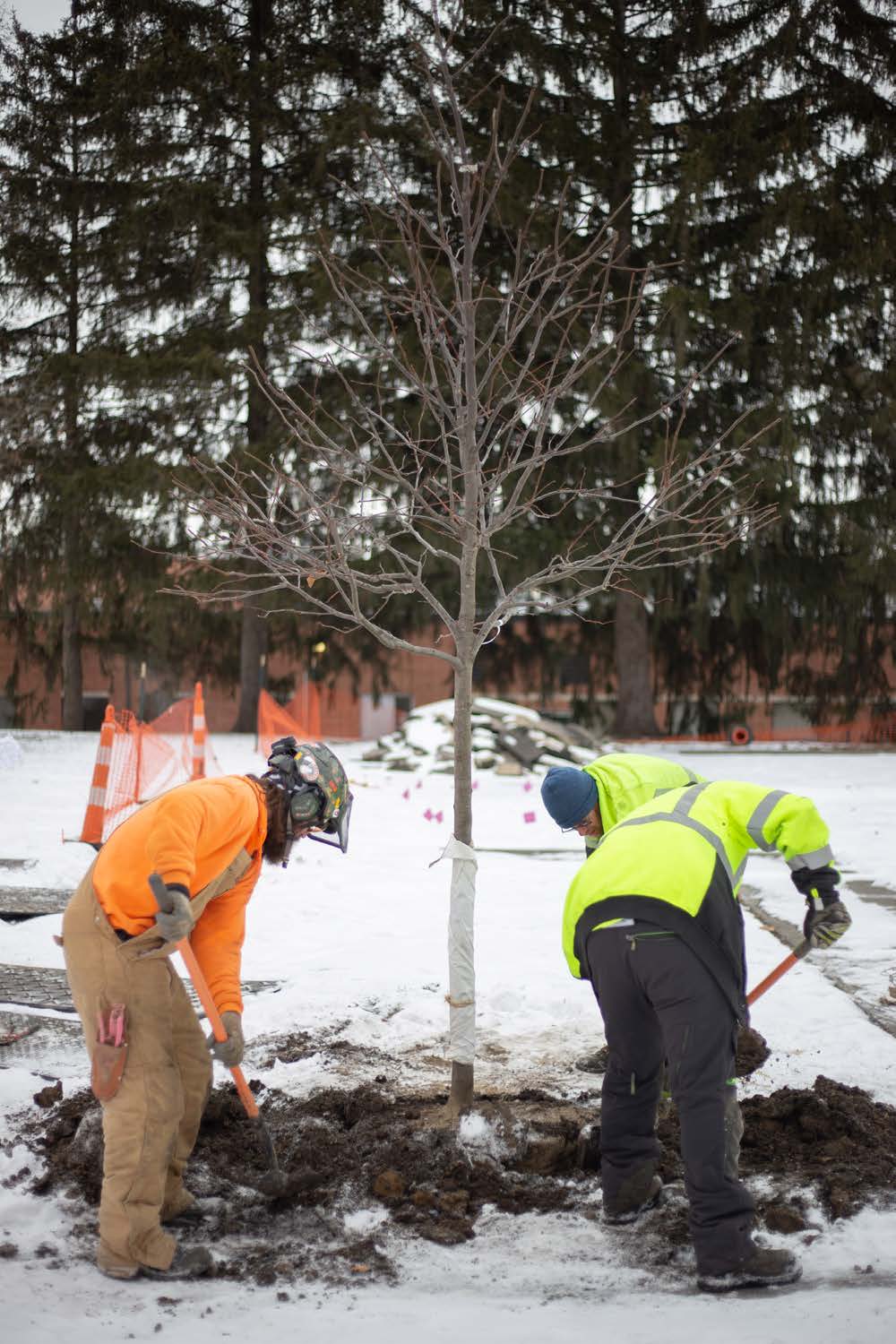
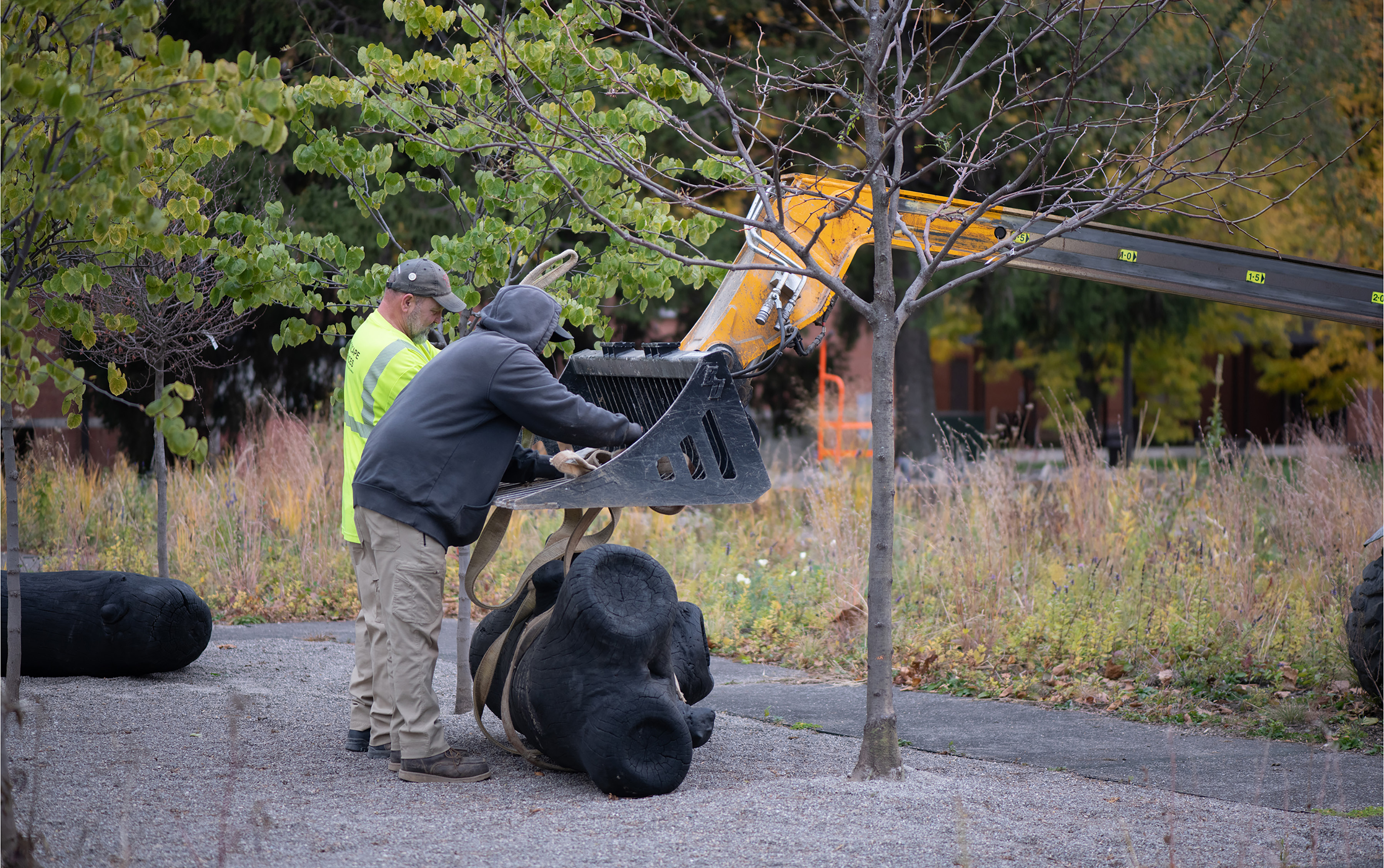
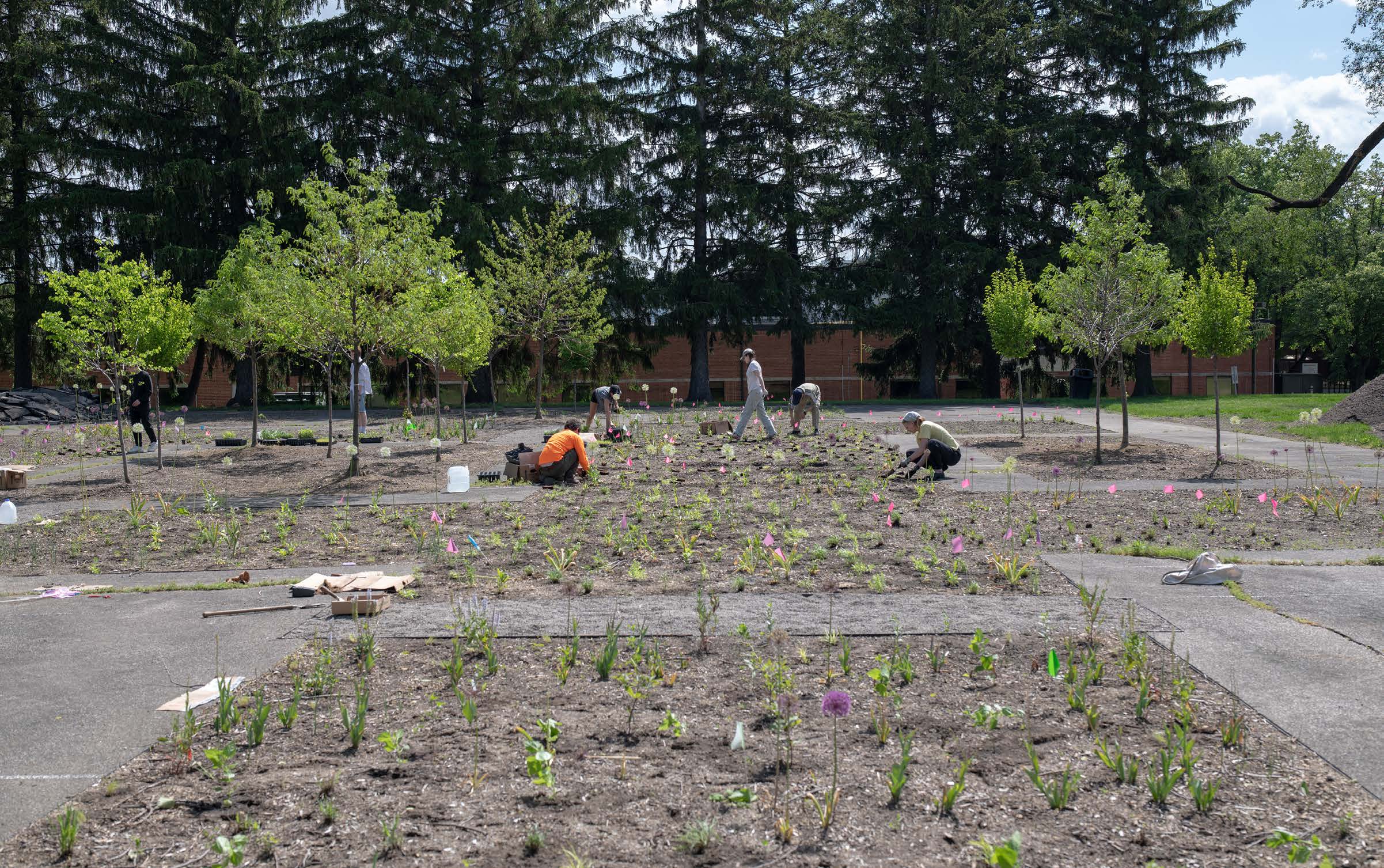
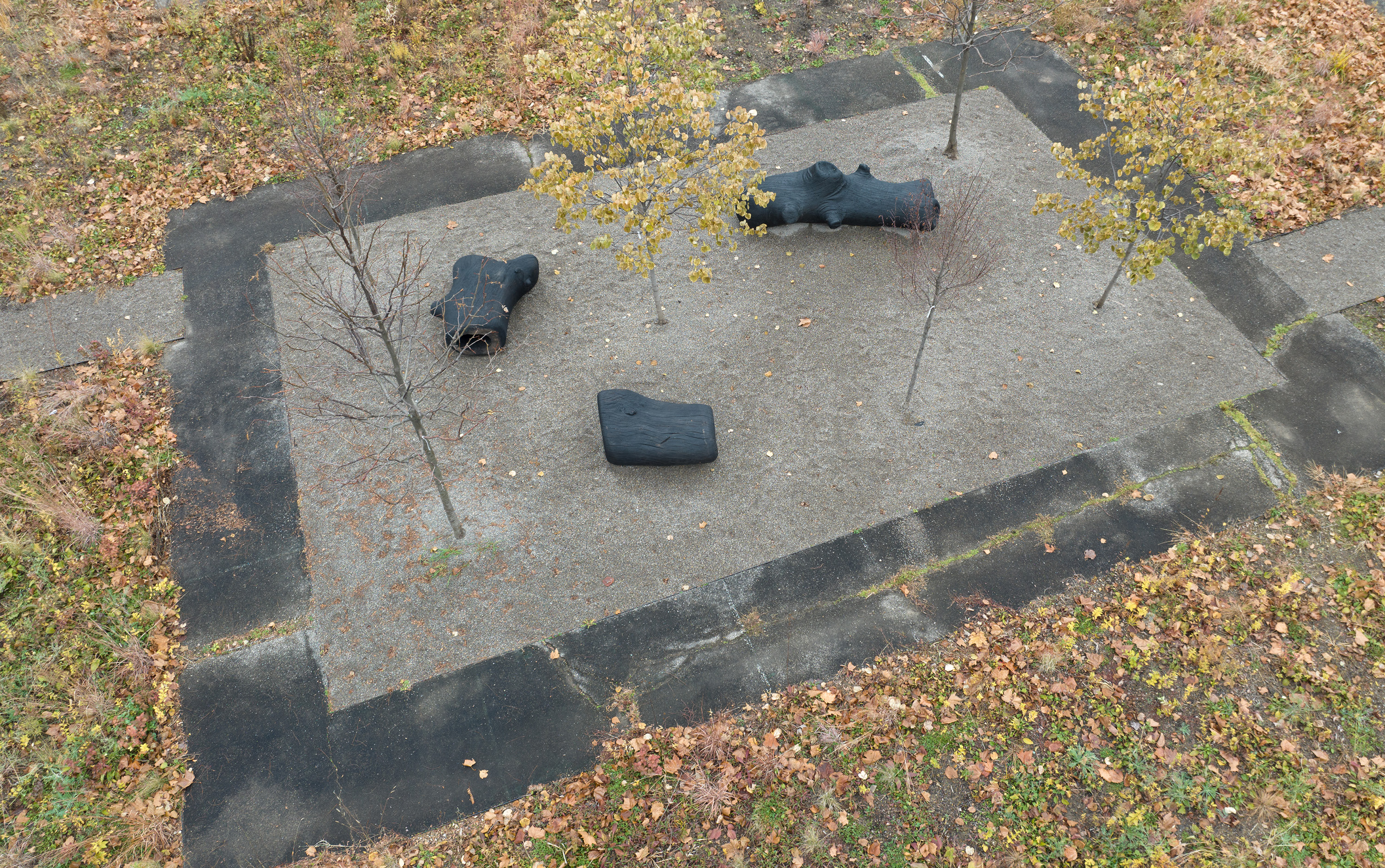
Work began in November 2024 when Facilities Operations and Development (FOD) crews completed the first round of asphalt excavation. Initial seeding and planting followed immediately through November and December. In January 2025, trees were planted throughout the site, also by FOD. By spring, more than 2,000 plant and grass plugs were installed with the help of student volunteers. Sutton and Jenkins spent the summer watering and weeding the prairie while continuing work on the site’s unique features. “When I wasn’t tending to the site, I was fabricating the large, charred logs functioning as site furniture,” said Sutton. The logs, created from fallen campus trees, now serve as seating throughout the space. Last fall, the team also installed two Corten steel planters filled with reclaimed asphalt to create experimental “dry” asphalt gardens. This coming spring and summer, FOD will complete pathways that connect the prairie to nearby sidewalks, improving accessibility and encouraging visitors to explore the space.
The project brought together partners from across the university to help turn the idea into reality. Aaron Rumbaugh, university landscape architect for Planning, Architecture and Real Estate (PARE), helped connect the many teams involved. “I was mostly helping pull all the necessary parties together. The medical center for approval of the site, IPPLG for funding and FOD for construction, and I acted as the PARE representative for general campus appropriateness,” said Rumbaugh. He said the project stands out because of its creative design and collaboration. “The way Parker and Katie used materials and planting to revitalize a forgotten site made the project a unique one on campus,” said Rumbaugh. “This was an asphalt pad with nothing that made people want to interact. Now the space is more welcoming with furniture, planting and tree and shade cover.” The FOD arborist team also played a key role in the project, helping Sutton and Jenkins set up an outdoor workshop at the campus log pile where the charred wood seating was fabricated and assisting with the careful placement of the large logs at the site.
For campus planners, the prairie reflects the goals outlined in Framework 3.0, the university’s long-term vision for campus development. Rebekah Gayley, assistant director of facility planning, said the project supports the plan’s guiding principles of community, experience, stewardship and connectivity. “The project took an abandoned space that was something of an eyesore and created a space that promotes community by creating a place for interdisciplinary learning and research,” said Gayley. “By removing impervious surface and replacing it with plantings, the project becomes a living laboratory to investigate best practices for similar interventions in a city’s hardscape.” She also hopes the project inspires others to think creatively about future IPPLG proposals. “Many space grant dollars are put toward interior improvements like furniture or lighting,” said Gayley. “This project shows that IPPLG is open to projects that address exterior spaces and employ a little outside-the-box thinking. Outdoor spaces, the spaces between buildings, are an essential component of the campus experience.”
As educators, Sutton and Jenkins designed the prairie with students in mind. “As educators first, we are always thinking of our students,” Jenkins said. “We will continue to invite students to observe the site as it is constructed to teach them about construction and demolition techniques.” Students will also have opportunities to volunteer during planting days, helping transplant grasses, sow native seeds and plant trees while learning about landscape construction and ecology. Because the site includes a diverse and unusual plant palette, it also provides valuable opportunities for plant identification and environmental education.
The prairie was also designed to support the well-being of the campus community. “We want this space to be a respite for hard-working Ohio State faculty and staff,” said Jenkins. “This space is multi-sensory and biodiverse not only for environmental reasons but because these attributes are shown to lower cortisol levels, reduce anxiety and lift moods.” Once established over the next two to three years, the prairie will become both highly ecologically productive and low maintenance. “It’s highly biodiverse, with dozens of species not found elsewhere on campus and countless pollinators already showing up,” said Sutton. “The plants’ deep roots will improve soil architecture and make it into a stormwater sponge.” The prairie will also require minimal upkeep. It will never need mowing, and the selected plant species are drought-adapted and heat tolerant, requiring little to no watering once established.
For Sutton and Jenkins, the support of the IPPLG team was key to bringing the prairie to life. “Knowing of IPPLG’s grant-funding activity encouraged us to imagine a project like this and believe that it could become a reality,” said Sutton. “We could never have done this without their support.” What was once an overlooked asphalt pad is now becoming a thriving prairie that will continue to grow, evolve and welcome Buckeyes for years to come.