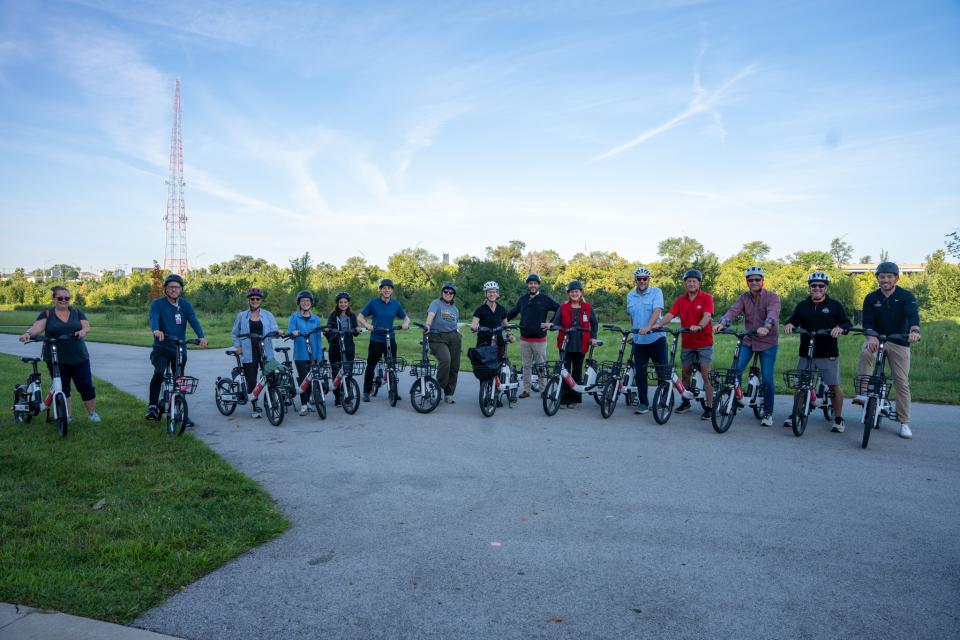
The Ohio State University was awarded the federal Safe Streets and Roads for All (SS4A) grant to complete supplementary planning for multimodal roadway users on the Columbus campus and adjacent streets. As we plan, we are identifying priority projects and innovative solutions to improve campus roadway safety. As the project takes shape, your feedback is critical. Please take our survey to help us prioritize our work.
Snapshot: Campus Traffic
- 600K Shared Mobility Trips
- 3M Campus Bus Riders
- >60K Annual Patient Admissions
This work complements safety action plans completed recently by both the Mid-Ohio Regional Planning Commission and the City of Columbus. While Ohio State has completed long-range planning (Framework 3.0) and transportation planning (Comprehensive Transportation and Parking Plan), the university has not completed a non-vehicular mobility plan since 2006. This planning is one of several future initiatives in our continuing efforts to implement Framework 3.0.

Safety
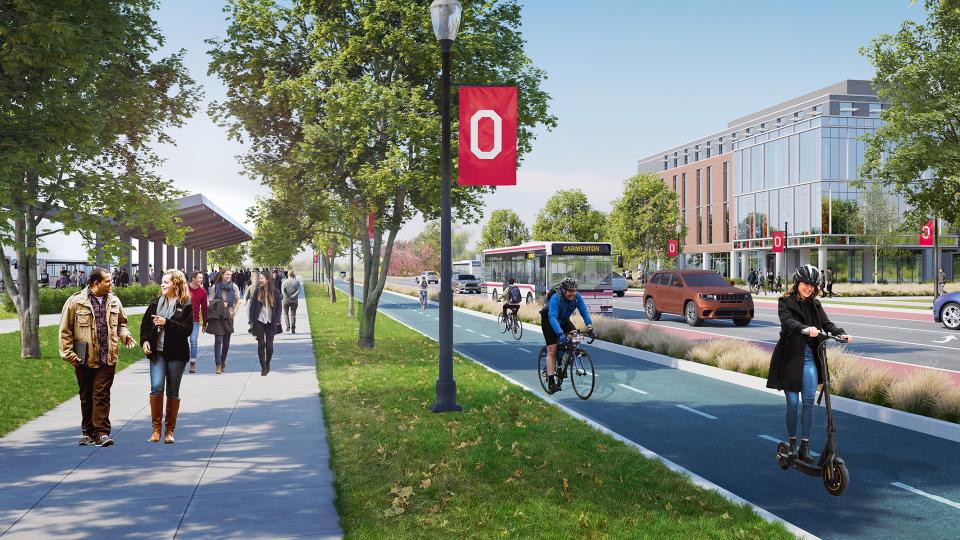
We are making our Columbus campus to be safe for all road users and modes of transport, not just for those behind the wheel of a personal vehicle.

Access
Ohio State will continue to grow. Our plan will ensure that all parts of campus are accessible, so all can share in educational and economic benefits.

Equity
We want to ensure that there is equity for all visitors regardless of transportation mode to ensure safety, access, comfort, and convenience.
By the Numbers
| Data Point | Stat |
|---|---|
| University District Density | 16,058 ppl/sq mile |
| Student Population | 60,046 |
| Employee Headcount | 53,046 |
| Number of Acres | 1,714 |
| Number of Buildings | 603 |
| Athletics Weekly Visitors (Fall) | 311,000 |
| Wexner Medical Center annual ER visits | 120,486 |
| Wexner Medical Center Annual Births | 5,323 |
| Special Events Annual Visitors (Schottenstein) | 163,000 |
Visit Institutional Research and Planning's Statistical Summary page for more data points.
Resources
- City of Columbus: Bike Plus
- Mid-Ohio Regional Planning Commission (MORPC)
- Ohio State Facilities Operation and Development: Sustainability
- Ohio State Framework 3.0 Plan
- Ohio State Transportation and Traffic Management: Other Transit and Services
Steering Committee
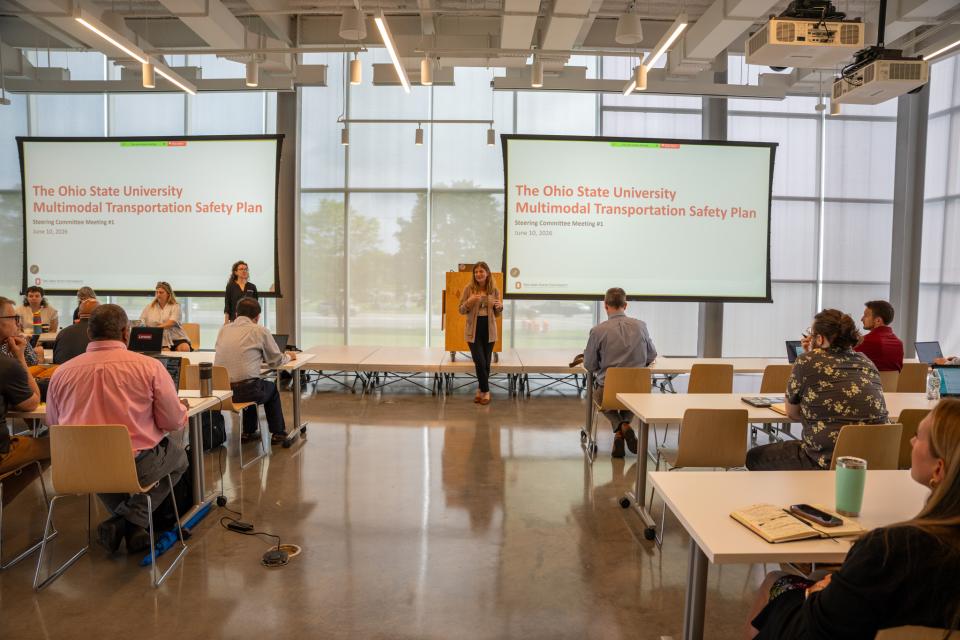
The Safe Streets for Buckeyes Steering Committee will serve as an advisory body throughout the planning process for the Safety Plan. Members will help guide the overall direction of the plan, ensure alignment with campus and community priorities, and provide insights regarding implementation considerations.
This group is critical critical to the success of this effort. The Steering Committee will play a central role in shaping a safety plan that reflects campus needs, integrates diverse perspectives, and results in meaningful, actionable improvements. Their expertise will help ensure that the final plan is both visionary and implementable, supporting a campus-wide and regional goal of eliminating fatal and serious injury crashes.
Role and Responsibilities
As a Steering Committee member, individuals will be asked to:
- Provide professional expertise and perspective to inform plan development
- Review and provide feedback on safety analysis findings and identified priorities
- Help shape goals, strategies, and project recommendations that are consistent with the university’s Education for Citizenship 2035 strategic plan and the Framework Plan 3.0
- Offer guidance to ensure recommendations are practical, coordinated, and implementable
- Support alignment with ongoing campus, local, and regional initiatives
Time Commitment and Engagement
Steering Committee members will be engaged at three key milestones in the planning process:
- Meeting 1 – Project Kickoff & Listening Session: Introduction to the project, review of safety data and trends, and discussion of key issues and priorities
- Meeting 2 – Strategy Development: Review of detailed safety analysis results, potential goals, and initial strategies; discussion of potential program, policy, and project solutions
- Meeting 3 – Plan Review & Implementation: Review of the draft action plan and discussion of implementation roles, priorities, and next steps
Each meeting will be approximately 1.5–2 hours in length and will be held in person on campus. Additional participation may include occasional review of brief materials or follow-up feedback between meetings.